
The Administrative State’s Hidden Architecture (Part 2) Education, EFAs, and Administrative Inheritance
Entering Charles Merriam's Marble Cake Factory

Education policy in the United States is often framed as a simple contest between federal authority and state authority, as though the two operate in separate spheres. In practice, modern education governance functions through an administrative ecosystem shaped by federal statutes, federal agency rulemaking, and state education agencies that have been conditioned by decades of participation in federally structured programs. This structural reality matters when evaluating Education Freedom Accounts (EFAs), which are created and funded by states but are frequently administered by institutions whose operating assumptions were formed under federal administrative regimes.

Federal education law begins with broad statutory mandates enacted by Congress. The Every Student Succeeds Act (ESSA), which reauthorized the Elementary and Secondary Education Act, establishes federal education funding programs and sets general conditions related to accountability, assessments, and reporting. Likewise, Title IX of the Education Amendments of 1972 establishes a broad prohibition against sex-based discrimination in education programs receiving federal financial assistance. These statutes articulate principles and funding conditions, but they do not provide detailed instructions for day-to-day administration.
Those details are supplied through administrative rulemaking by the United States Department of Education under the federal Administrative Procedure Act. The Act requires federal agencies to publish proposed regulations, solicit public comment, and follow prescribed procedures before issuing final rules. Through this process, the Department of Education has promulgated extensive regulations interpreting ESSA, Title IX, and other federal education laws. Once finalized, those regulations carry the force of law and define the practical obligations imposed on the states.
What actually governs people’s daily experience of education is not the laws Congress passes, but the rules written later by administrative agencies. State Departments of Education do not draft federal regulations, but they are required to administer programs in conformity with them as a condition of receiving federal funds. When a state accepts federal education dollars, it agrees to implement federal requirements through its own agencies, effectively transforming those agencies into the enforcement mechanism for federal administrative policy.
Over time, this role reshapes state education agencies themselves. Their internal compliance offices, legal divisions, data-collection systems, and oversight procedures are built to meet federal requirements. Staff are trained to interpret federal guidance, prepare federal reports, and anticipate federal audits. Although these agencies remain legally state entities, their institutional culture becomes oriented toward federal compliance.
New Hampshire provides a clear statutory example of how this administrative structure operates. Under New Hampshire Revised Statutes Annotated RSA 21-N:9, the State Board of Education is directed to adopt rules governing fundamental aspects of the state education system pursuant to RSA 541-A, New Hampshire’s Administrative Procedure Act. RSA 541-A establishes the procedures by which state agencies promulgate rules, including notice requirements, public hearings, and standards for adoption and enforcement. Through this statutory framework, the legislature delegates significant implementation authority to the education agency, requiring policy details to be filled in through administrative rulemaking rather than direct legislative specification.
This same mechanism appears in New Hampshire’s Education Freedom Account statute. RSA 194-F, which authorizes the EFA program, provides that the Department of Education “shall adopt rules necessary for the administration of this chapter.” The statute establishes the program in principle but explicitly anticipates that eligibility standards, documentation requirements, oversight procedures, and enforcement mechanisms will be developed through rulemaking under the state Administrative Procedure Act. In other words, legislative authorization is followed by administrative elaboration.
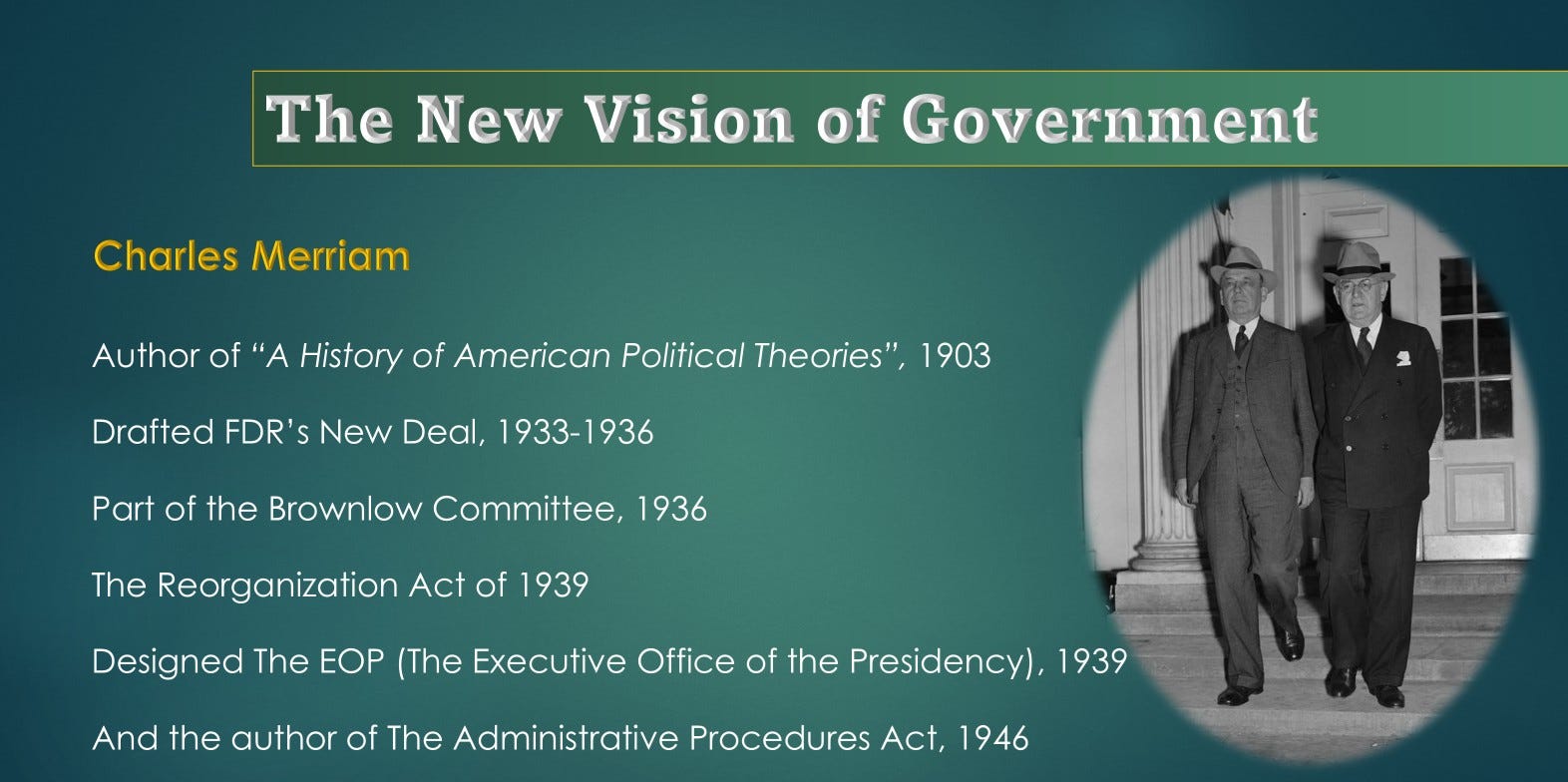
This structure mirrors the federal arrangement. Congress enacts broad statutory mandates. Federal agencies fill in the details through rulemaking under the federal Administrative Procedure Act. States, in turn, administer those federally conditioned programs through agencies governed by state administrative procedure acts modeled on the same framework. Even when a program like an Education Freedom Account is funded entirely with state dollars, the administrative process used to implement it reflects decades of institutional conditioning shaped by federal rulemaking norms.
The effects of this conditioning are visible in practice. State education agencies routinely apply federal-style compliance mechanisms to state programs because those mechanisms are familiar and institutionally entrenched. Documentation requirements, audit procedures, data-reporting expectations, and appeal processes often resemble federal program administration even when state law does not explicitly require such rigor. The agency defaults to the methods it knows.
This phenomenon can be described as administrative inheritance. State programs inherit not federal law itself, but the administrative habits, compliance culture, and procedural assumptions developed through long participation in federally governed systems. The influence is indirect but persistent, and it shapes how state initiatives are implemented regardless of funding source.
Understanding this helps clarify why debates about federalism in education frequently talk past the real issue. Critics warn of overt federal takeover, while proponents assume that state funding alone guarantees autonomy. Both positions overlook the central role of administration. Who administers a program, and how that institution has been trained to think about regulation, can matter as much as the statutory language authorizing the program.
Education Freedom Accounts thus exist within an administrative environment that is not neutral. They are implemented by agencies shaped by federal statutes interpreted through federal rulemaking and reinforced through state administrative procedures. This does not make EFAs federal programs, but it does mean that independence depends not only on funding sources, but on conscious attention to administrative design and oversight.
The same structural pattern appears beyond education, particularly in areas involving security, emergency management, and public health, where federal agencies generate rules under the Administrative Procedure Act and states enforce them through parallel administrative systems. Examining those areas makes the architecture of administrative governance even clearer, and it is to that comparison that the next part of this series will turn.
Medicaid is often described as a voluntary federal–state partnership. States are not compelled to participate, and the program is established through state plans approved by federal authorities rather than imposed by direct federal command. Yet once a state enters the Medicaid system, its discretion is sharply constrained. Federal statutes establish baseline eligibility categories and mandatory benefits, while the Centers for Medicare & Medicaid Services (CMS) supplies detailed regulations, guidance, reporting requirements, and audit standards. State agencies must maintain extensive administrative infrastructures to manage eligibility determinations, provider reimbursements, data reporting, and federal oversight. Even when states seek waivers or flexibility, those requests are processed through federal administrative channels and conditioned on federal approval. Over time, the administrative cost of withdrawal becomes prohibitive—not because states lack legal authority to exit, but because their health systems, budgets, and bureaucracies have been reorganized around federal compliance.
Title IX reflects a similar dynamic in the education context. The statutory text of Title IX is brief, prohibiting sex-based discrimination in education programs receiving federal financial assistance. However, the statute itself does not define most of the obligations that institutions must satisfy. Those obligations have instead been elaborated through decades of administrative rulemaking and interpretive guidance issued by the U.S. Department of Education. Definitions of discrimination, compliance procedures, investigative standards, reporting obligations, and enforcement mechanisms have shifted repeatedly without changes to the underlying statute. States and educational institutions experience Title IX not as a law enacted in 1972, but as a living administrative regime enforced through regulations, guidance documents, and the conditional threat of funding withdrawal. Even when particular rules are challenged or rescinded, the compliance structures built to satisfy earlier interpretations often remain in place.
Education Freedom Accounts, though funded and authorized at the state level, are administered by education agencies shaped by these same administrative experiences. State Departments of Education that oversee EFAs have spent decades operating as intermediaries between federal education statutes and local implementation. Their internal cultures, legal frameworks, compliance offices, data systems, and audit practices were developed to meet federal expectations under programs like ESSA and Title IX. As a result, when those agencies are tasked with administering EFAs, they naturally default to familiar regulatory tools: detailed eligibility verification, documentation requirements, monitoring protocols, and enforcement procedures modeled on federal program administration.
This does not mean that EFAs are federal programs, nor that federal law directly governs their operation. Rather, it illustrates how administrative inheritance functions. State agencies do not import federal law into state programs; they import federal modes of governance. The same administrative logic that governs Medicaid eligibility or Title IX compliance is applied to EFAs not because statutes require it, but because institutions have been trained to operate that way.
Understanding this continuity helps clarify why debates over EFAs often miss the core issue. The question is not simply whether funding is state or federal, nor whether statutory authority rests with the legislature or Congress. The decisive factor is administrative design: who writes the rules, what compliance assumptions they bring to the task, and whether legislative oversight meaningfully constrains the rulemaking process. Without attention to those factors, programs intended to expand parental choice risk being absorbed into the same administrative structures that govern federally conditioned education policy.